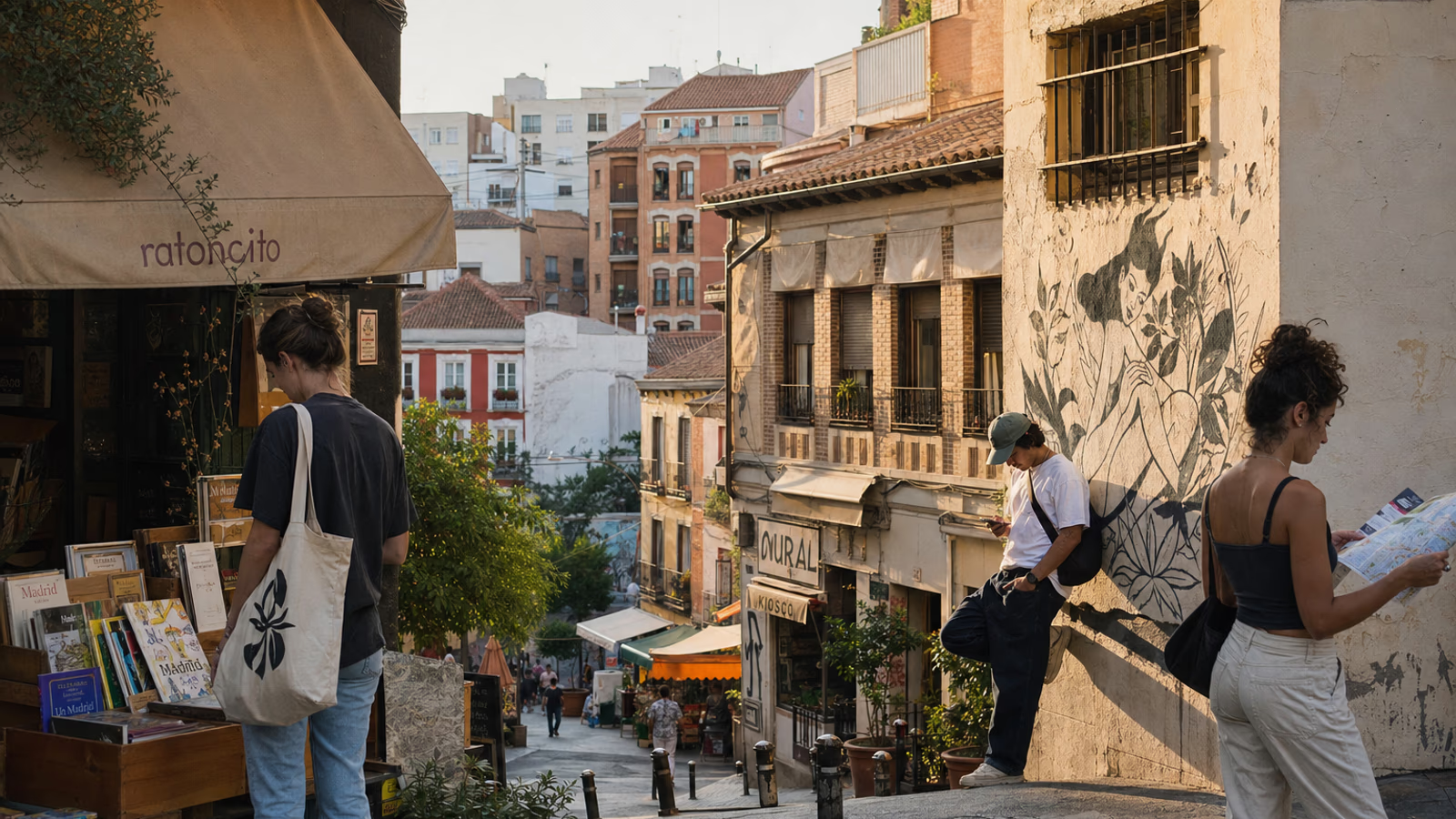
Located in the heart of Madrid, Embajadores is a district where tradition, multiculturalism, and vibrant cultural life come together, especially in Lavapiés.
What makes Embajadores unique?
Embajadores reveals its history in layers, a slow sedimentary process visible in the very fabric of its streets. What was once the city's periphery, a working-class quarter outside the old walls, now stands as its vibrant, multicultural heart. This transformation is most palpable in Lavapiés, where the old *corralas*—communal housing built around a central courtyard—now echo with languages from every continent. Here, century-old storefronts coexist with new ventures, and the Mercado de San Fernando anchors it all, a beautiful iron-and-glass structure where the city’s pulse is measured in artisan bread and vermouth on tap.
The area’s architectural skin is a canvas in constant flux. The brick facades and aging plaster become the backdrop for a sprawling, open-air dialogue of murals and ephemeral art, a stark contrast to the permanent collections of the nearby museums. This isn't just decoration; it's a public statement, renewed each spring during the CALLE Lavapiés festival, when artists are invited to add their contemporary voice to the district's historical narrative. It's a living gallery.
What to see in Lavapiés and nearby?
For those whose curiosity is stirred by the intersection of history and art, a short, ten-minute walk leads to the Reina Sofía. The building itself is a masterpiece of architectural conversation: the severe, classical facade of the old hospital, originally designed by Sabatini, is dramatically interrupted by the soaring glass and steel elevator towers added by Jean Nouvel. Inside, this dialogue continues, with Picasso's 'Guernica' holding court as a testament to Spain's turbulent twentieth century. It’s a powerful experience.
Just nearby, the Valle-Inclán Theatre presents another facet of the area’s cultural life, its stark, modern lines housing some of the most challenging and contemporary dramatic works in the country. But for a moment of quiet reflection, we often point guests towards the gardens of the former Casino de la Reina. This isn't a grand, formal park; it's a more intimate, secluded green space, a remnant of a royal estate that provides a welcome pause from the dense urban grid.
Here, the texture of old brick and the scent of global spices tell the same story: a neighbourhood built on layers.
Why is Embajadores perfect for exploring on foot?
The neighbourhood's topography, a gentle but persistent slope descending from its highest point, dictates a certain pace. Its medieval layout of narrow, winding streets compels you to explore on foot, to surrender to its logic. What we know from working here every day is that this is where Madrid's character is found—not in grand avenues, but in the sudden reveal of a quiet plaza, a century-old tavern with its original zinc bar, or a small gallery tucked into a former workshop. It’s a district that rewards slow, observant walking.
| Place | Distance from Lavapiés | Type of visit |
|---|---|---|
| Reina Sofía Museum | 800 m | Art and culture |
| Mercado de San Fernando | 400 m | Gastronomy and shopping |
| Casino de la Reina Park | 600 m | Nature and relaxation |
When might Embajadores not be ideal to visit?
The energy of Lavapiés is one of its defining characteristics. But it's not for everyone, all the time. During the August festivals of San Cayetano, the streets become a dense, vibrant river of people, a spectacle of local tradition that is immersive but can be overwhelming for those seeking tranquility. Similarly, weekend evenings here possess a distinct intensity, with terraces and bars overflowing onto the pavement. It’s the neighbourhood at its most vital, but it’s a specific kind of vitality.
Final tip for exploring Embajadores
To truly appreciate Embajadores, we recommend dedicating an entire morning or afternoon, allowing the neighbourhood to unfold at its own rhythm. Comfortable footwear is not just a suggestion; it's essential for navigating the sloping cobblestone streets that give the area so much of its historical weight. After a day spent absorbing the district's dense layers of art and life, our hostels, Inter Plaza Mayor and Inter Puerta del Sol, offer a quiet, central place to rest, just a brief walk away, connecting you back to the city's historical core.
More at interhostales.es: Inter Plaza Mayor · Inter Puerta del Sol · our rooms
Further reading: Reina Sofía Museum · Mercado de San Fernando · CALLE Lavapiés festival
Keep reading: Exploring Barrio de las Letras: Madrid's Literary Heart · Discover the Habsburg Quarter: History and Traditional Charm · Exploring La Latina: Plazas, Taverns, and History · San Antonio de la Florida Festival: Madrid's first summer celebration · Music Day Weekend Kicks Off in Madrid